

Romance is lived in unknown spaces
- Grace Lambert-Phillips
- Jun 30, 2025
- 9 min read
Updated: Jul 2, 2025

Today I was inspired to write about romance and what it means in today's society—what it means at all. We often talk about romance in the context of love, but romance also exists in life itself. Through my own process of personal interrogation, I’ve come to the conclusion that, for me, romance is lived in the unknown places—not just locations we've never been to, but the unseen spaces of life where possibility exists.
As in love—when a person enters your life for the first time and, somehow, the spark of romance strikes—you feel as though you've known them forever. Romance lives in these moments, and when it arrives, it is undeniable.
But what is it, really? And how is it created? This is the thing: it’s elusive. A byproduct of a way of living that can’t be deliberately manufactured. People try—but the truth is, the more you try, the less like romance it becomes. Romance is like the x factor of life; it arises naturally, under a certain mix of magical ingredients, often involving a mix of beauty, passion, and creativity and a tone of authenticty.
It’s like creating art: you show up and do the work, and if it’s done authentically—if you bring something real from within, something you want to express and make visible—then art has the possibility to emerge. Romance is elusive in this same way. It’s a co-creation, a kind of alchemy. To produce that magic, you must be willing to dance with the unknown and accept the form it takes—because, like art, it rarely appears exactly as you imagined it. There’s a letting go in this. Romance is lived in the spaces we leave for life.
My kind of romance often comes in the vision of a door—which is offering a glimpse into what might be on the other side, always an unfolding story and the possibilities of that. I remember as a child reading a book that I found at the library and was inspired by only because the cover showed a staircase leading up to a door, which was slightly open and I wanted to understand what was behind it. I was very curious of these things and recall reading the entire book very quickly on a quest to discover what was behind the door only to get to the end and realise that the story did not divulge this informatioin. It left me hanging and wondering forever more and you can imagine my 8 year old disbelief upon reaching the end. When I started taking photographs this fascination also crept into my images, as more often than not, I seemed to be looking through an archway or a doorframe, as though I was viewing the world this way, as an observer from the other side. I still do it and never consciously. Like all good romances it is often what is not revealed or said, but truly felt, which can be the most memorable and alluring. Why? Could it be because it leaves space for us to experience rather than be told how to feel and this is where we feel alive to it? When we live out our own possibilities for each moment, we are wrting our own story. And maybe it's not for anyone else to tell us what is behind that door and this is the romance of it.

So, taking this idea and setting it against the world we are currently living in—the era of the 2020s—where it seems that romance is becoming, apparently rarer, I ask myself why that is. Romance, to me, is a part of life which is so essential that I simply cannot accept its demise.
I am currently writing a book about my life and experience as the muse of Jack Vettriano, an artist who built a career on romance. Each of his works of art was created in a moment of romance—not necessarily love, but certainly romance—based on his idea of beauty, passion, and inspiration. The world he painted was a nostalgic one, full of romance and, to use his words,"visual pleasure."
My mother was raised on the same grounds as Jack, in the same era. They frequented the same ballroom and danced to the same orchestra sometimes which were depicted in the scenes Jack later committed to canvas. I understood his world by heart. It was nostalgia and romance personified for me, the glorioius pictures I had imagined listening to my mother's stories. So you can imagine how romantic it is for me to see myself within those paintings—in oil on canvas.

The very art of putting oil on canvas, or ink on paper, is within the essence of what I call romance as I think that it is contained within the divine and beautiful efforts of the human being—the act of the lovingly lived experience—where we are willing to dance with life and commit ourselves to creating something to treasure. Romance is found within this treasure.

So perhaps the lack of romance in our current set up in society may lie in marketing strategies and concepts which tailor environments and experiences from start to finish, leaving no space for the unknown to unfold. Or the 'perfectly' curated event as though life is meant to be lived through a predetermined framework—one designed with you in mind, you being a statistic. Or travel itineraries tailored, moment by moment, without the time or space to actually experience anything, but tick a box saying, you were there at least.
This is why the idea of the Grand Tour is so compelling to me—the lived travel experience which was earned and co-created through an unfolding journey.
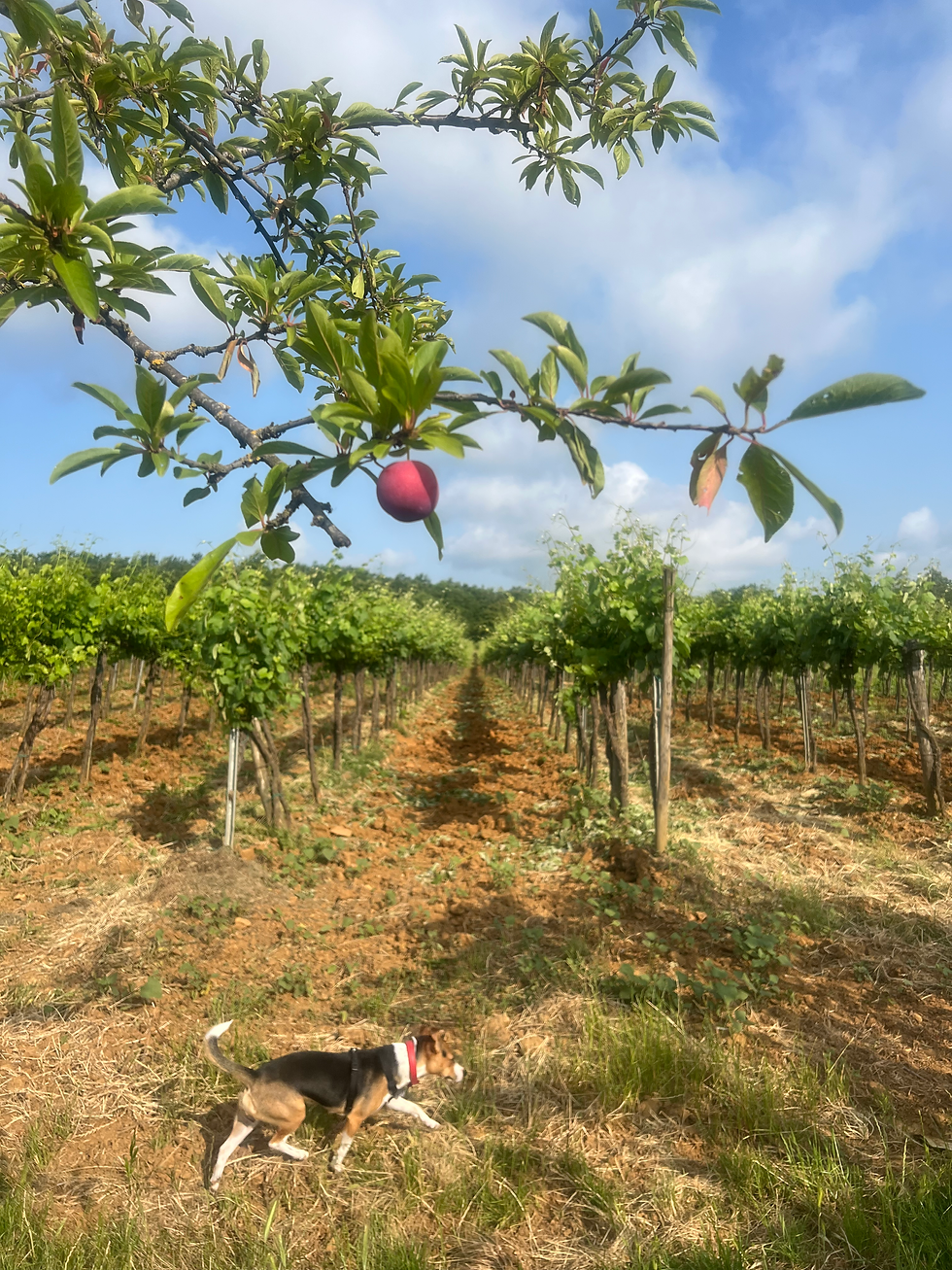
I am currently living my summer on a vineyard in Tuscany, sitting at a table on a terrace with crickets loudly accompanying my writing. Vines stretch out in every direction. A light breeze helps to cool me slightly while gently lifting the edge of my beautiful bright pink silk table cover—then a white butterfly flutters by… and yes it is romantic but not by design. I just sat down to write, and this was how it unfolded...romantically.

My book about Jack is a romantic memoir of an era, as much as it is about my own experience. It begins in Scotland and quickly moves to London, where I discovered a city alive and free—before smartphones and Wi-Fi existed on every corner of life. A time when life was lived and experienced through human interaction, when houses still had landlines and people looked up numbers in phone books.
Looking back, I feel a deep sense of nostalgia for what now seems so innocently beautiful. Of course, mobile phones existed, but they weren’t used the way they are today—to organise our entire lives or to serve as cameras. They were just a basic tool for communication. There were many, many moments when we didn’t even think to look at them and certainly never had conversations during dinner..
Everything changed when our phones became cameras, and I believe that moment marked the beginning of the end of a side to romance that we once knew. When people weren’t so focused on how they looked, or appeared, but more on how they felt and they were in the experience rather than recording it to show that they lived it, which is a strange way to live. Photography used to be special—it captured key moments of life and the people around us were failry unaware of the fact that they were part of a record of life, captured in authentic moments, we were just savouring memories that were also lived.. With the rise of selfies and social media, not only have we all become 'photographers' we have also shifted into a strange kind of self-obsessed world that always points inward and is reflecting the lived experience outwards as though we are all in our own tv show. We capture moments with an extra strong awareness over the way it will be perceived rather living the moment regardless.

The era in London I’m writing about at the moment took place only 25 years ago, but it feels like a lifetime ago now, given how much the world has changed. Jack never painted a phone—unless it was a retro phone box or an old rotary phone—and even then, it would've been a symbol of a meaningful act. Such were the high stakes in his work, every act came with an intention, a conversation which could potentially change the course of a life. This is where the possibilit of romance comes in, within the small yet profound acts of a daily life.
These days, people are constantly talking or communicating—about everything, and mostly about nothing. I believe this constant act of communication and surveliance of our most precious commodity, our time, is having a huge effect on the possibiity of romance in the modern world.
My mum and Jack often told me stories about growing up in Scotland in the 60's when, after a romantic meeting, they would arrange their date for the following Saturday evening, the big night of the week. They would agree where to meet, perhaps under the clock of the town hall, and until the agreed meeting time came there would be no contact, no news, just the sweet romance of anticipation and preparation. That level of romance is certainly a forgotten era.

Italy—is a country of romance and culture —but currently it is also a country choking under the burden of its own over-tourism and its struggle with the commercialism that this issue demands. Even here there is a danger of the loss of romance and heritage, which is the very core its cultural life.
But as I write this, I balance what I just said, and tell you that I am currently also watching the live horse trial of the Palio of Siena on television, where horses are ridden bareback in the Campo of the city. Crowds cheer as jockeys, in their bright colouful silk suits, race around the sands of the Campo. The theatre—the false start, the heat, the excitement—as thousands gather in the piazza. I have a warm feeling in my stomach, and I realise: this feeling warmth and curiosity, is romance. Imagine being in the crowd.
This event is one of many in italy which is grounded in tradition, expertise, dedication, showmanship, and community—and there is that unknown element. Nobody knows what will happen: who will win, which horse, which contrade. An evening of possibility and celebration. One of undeniable romance, played out on the theatre stage of life.

Here in Italy, I am the Art Director overseeing the restoration of the cultural spaces at Villa La Posta in Tuscany. My role is to guide the cultural development of this restoration project into the 21st century—evolving it for a new era while preserving the integrity and romance cultivated over the past three centuries, as the villa transitioned from a Grand Tour hospitality estate to a private home and now returns to its original purpose in the realm of hospitality and culture—an important piece of Italian heritage.
This villa was once a vital stop on the Grand Tour of Italy—a place where travellers came to taste the culture of this country and to learn by experience. Before entering the highway to Florence, they would rest here, dine, and add two extra horses to their carriages for the journey ahead. The highway permitted four horses whereas before this point on the journey only two were allowed, and with that extra horse power, they moved faster—towards knowledge, discovery, and elegance - arriving in Florence. If that’s not a picture of romance, I don’t know what is.

When Jack came to visit the villa two years ago, he dreamed of working here with me. That was our plan but it wasn't to be as sadly he passed away earlier this year. But his story goes on as his legacy will live on here with me. Some of Jack’s last paintings will form part of the villa’s permanent collection. Alongside these, we are curating antique pieces that will become part of the daily life of the villa: a complete set of 17th-century French Baccarat glasses; porcelain dishes once used by Garibaldi; a tapestry depicting war and peace from the 15th century; and a Kerman Lavar persian rug embroidered with verses of Hafez describing love and romance in the most beautiful prose. There are delicate teacups and teapots, handwoven linens, storied furniture—each piece carrying a soul, and certainly, a thread of romance. These pieces will be there to be used and enjoyed - for romance is held within the experience of things and space they create, the possibilities that they invite.

This is a deeper experience of the beauty of craftsmanship and heritage—a truly romantic vision that reminds us romance is born in the unknown spaces and in the depth of the journey taken to reach them. It is shaped by the human integrity and passion required to bring such beauty into being. For romance and beauty are in partnership, and it is our relationship to ourselves, to one another, and to the natural world that provides the grounding where the alchemy of romance can exist.

Life at Villa La Posta will unfold like a story. One to be tasted, felt, and lived. Soon we will welcome you here, and we want you to know:
There is still romance in this world.


Comments